Texas County Map PDF: A Comprehensive Guide
Discover detailed Texas county maps in PDF format, essential for genealogical research, land records, travel, and geological surveys․ Access official government sources!
Texas county maps are invaluable resources, providing detailed geographical and political information about the state․ These maps delineate the 254 counties that comprise Texas, showcasing their boundaries, major cities, and transportation networks․ Increasingly, these maps are available in PDF format, offering accessibility and convenience for a wide range of users․
Historically used for land surveys and property records, Texas county maps now serve diverse purposes, from genealogical research to travel planning and geological studies․ The digital PDF format allows for easy distribution, storage, and printing, making them a practical tool for professionals and individuals alike; Understanding these maps is crucial for anyone working with Texas geography or history․
What is a Texas County Map PDF?
A Texas County Map PDF is a digital representation of a traditional paper map, formatted using the Portable Document Format․ This format preserves the map’s visual elements – county boundaries, cities, roads, and geographical features – while offering several advantages․ PDFs are platform-independent, meaning they can be viewed on any device with a PDF reader․
These digital maps often include high print quality, allowing for scaling to various sizes without loss of detail․ They are commonly created by government agencies like the Texas Parks and Wildlife Department and the U․S․ Census Bureau, as well as third-party providers․ The PDF format ensures consistent appearance and accessibility for all users․
Why Use a PDF Format?
PDFs offer significant benefits for Texas county maps․ Their universal compatibility ensures anyone can view the map regardless of operating system or software․ The format preserves formatting, guaranteeing accurate representation of county lines, city placements, and other crucial details․ PDFs are also easily shareable via email or websites, facilitating wider distribution of geographic information․
Furthermore, PDFs are relatively compact in file size, making them easy to download and store․ They support high-resolution images, vital for detailed map viewing and printing․ The format’s security features can also protect the map from unauthorized alterations, ensuring data integrity and reliability for various applications․

Finding and Accessing Texas County Map PDFs
Locate Texas county maps through official sources like government websites, the Texas Parks and Wildlife Department, and the U․S․ Census Bureau resources․

Official Government Sources

Accessing Texas county map PDFs directly from official government sources ensures reliability and accuracy․ The U․S․ Census Bureau provides county maps derived from Census 2000 data, displaying international and state boundaries, alongside county names and shorelines․ These maps are valuable for demographic and geographic analysis․ Furthermore, county-specific resources, such as Harris County JP/Constable Precinct maps, are available online, detailing precinct boundaries and divisions․ These official maps, often compiled by departments like the Texas Parks and Wildlife Department’s GIS Lab, offer a foundational layer for various applications, though accuracy claims may be limited․ Always verify data for critical applications․
Texas Parks and Wildlife Department Maps
The Texas Parks and Wildlife Department (TPWD) offers valuable county map resources, particularly those compiled by their GIS Lab․ These maps, often utilizing the Texas Statewide Mapping System projection, focus on geographical features relevant to wildlife management and conservation․ While TPWD maps provide a strong base layer, it’s crucial to acknowledge that “no claims are made to the accuracy of the data․” Users should independently verify information for critical applications․ These PDFs are useful for understanding land use, habitat distribution, and potential recreational areas within specific Texas counties, complementing other official sources․
U․S․ Census Bureau Resources
The U․S․ Census Bureau provides Texas county maps, particularly valuable for demographic and statistical analysis․ These maps, stemming from Census 2000 data, clearly delineate county boundaries, international borders (with Mexico), and state lines․ They include a legend for easy interpretation, showcasing county names like Adams․ While primarily focused on population data, these PDFs serve as a foundational layer for understanding the geographical context of demographic information․ Remember that boundaries and names reflect the data’s timeframe; always check for updated information from official county sources for current accuracy․
Third-Party Providers of Texas County Maps
Numerous online platforms offer Texas county maps in PDF format, supplementing official sources․ These providers often compile maps for various purposes, including property records and travel planning․ However, users should exercise caution regarding data accuracy and copyright restrictions․ Kleinfelder, for example, utilizes GIS data for projects, implying availability through similar engineering and environmental firms․ Always verify the source’s credibility and licensing terms before utilizing any third-party map․ Prioritize official government PDFs whenever possible to ensure the most reliable and legally sound information for your specific needs․

Understanding the Information on a Texas County Map
Explore county boundaries, cities, roads, and geographical features like rivers and lakes on Texas county maps, often utilizing the Texas Statewide Mapping System․
County Boundaries and Names
Texas county maps meticulously delineate the official boundaries separating each of the state’s 254 counties․ These lines, often depicted in dark black on high-quality PDF versions, are crucial for defining jurisdictional areas and property locations․
Accompanying these boundaries are clearly labeled county names, providing immediate identification․ Maps from the U․S․ Census Bureau, for example, specifically note international and state boundaries alongside county designations․ Precise boundary representation is vital for legal purposes, land ownership verification, and accurate geographic referencing within Texas․
Major Cities and Towns
Texas county map PDFs prominently feature major cities and towns within each county, aiding in location and navigation․ These urban centers are typically indicated with distinct symbols or font sizes, differentiating them from smaller settlements․
Harris County maps, for instance, will clearly show Houston, while maps of San Patricio and Aransas counties will highlight Aransas Pass․ The inclusion of these populated areas is essential for travel planning, emergency services, and understanding population distribution․ Accurate city and town placement enhances the map’s overall usability and informational value․
Roads, Highways, and Transportation Networks
Texas county map PDFs meticulously detail the state’s extensive road network, including interstate highways, U․S․ highways, and state highways․ These are typically represented with varying line weights and colors to indicate their importance and classification․
County road networks, crucial for local travel, are also depicted, though often with less prominence․ The maps aid in route planning and understanding transportation infrastructure․ Precinct maps, like those for Harris County, often showcase detailed road divisions; Accurate representation of these networks is vital for navigation, logistics, and emergency response․
Geographical Features (Rivers, Lakes, etc․)
Texas county map PDFs prominently display the state’s diverse geographical features․ Major rivers like the Rio Grande, Colorado, and Brazos are clearly delineated, often with names and sometimes watershed boundaries․ Lakes, both natural and man-made – such as Lake Texoma and Lake Conroe – are also illustrated․
Coastal features, including bays and inlets, are crucial for maps of coastal counties like Aransas and San Patricio․ These maps often show shorelines and parcel locations․ Understanding these features is essential for resource mapping, environmental studies, and geological surveys, particularly in areas like the Eagle Ford Formation․

Specific County Map Examples & Availability
Explore maps for Harris County JP/Constable precincts, San Patricio & Aransas county boundaries, and DeWitt County’s Eagle Ford formation details – readily available online!
Harris County JP/Constable Precinct Maps
Detailed maps illustrating the boundaries and division numbers within Harris County Justice of the Peace (JP) and Constable Precinct 4 are accessible as PDF documents․ These maps, specifically dated for 2016, provide a clear visual representation of jurisdictional areas․ They are invaluable resources for understanding local governance and legal districts within the county․
These PDFs delineate precinct lines, aiding in identifying the appropriate JP or Constable for specific locations․ The inclusion of major roadways and landmarks further enhances usability․ Access to these maps is crucial for residents, legal professionals, and anyone needing to determine precinct affiliations within Harris County․ They represent a vital component of public record accessibility․
San Patricio and Aransas County Boundary Maps
Specific PDF maps detail the boundary delineations between San Patricio and Aransas counties in Texas, offering crucial geographic information․ These maps visually represent the shared border, including the city limits of Aransas Pass․ Parcel locations within each county are clearly indicated, aiding in property identification and jurisdictional understanding․
These resources are particularly useful for legal matters, land surveys, and anyone needing precise county line information․ The detailed depiction of the boundary facilitates accurate location referencing and avoids ambiguity․ Access to these PDFs ensures clarity regarding county jurisdiction and property ownership along the shared border of San Patricio and Aransas counties;
DeWitt County Maps (Eagle Ford Formation)
DeWitt County, Texas, is a key area for understanding the Eagle Ford Formation, and specialized PDF maps are available for detailed geological characterization․ These maps focus on the marl and interbedded limestone layers within the formation, crucial for petroleum science and resource exploration․
Researchers and industry professionals utilize these PDFs to analyze subsurface structures and potential hydrocarbon reservoirs․ The maps provide a visual representation of the geological complexities within DeWitt County, aiding in accurate assessments․ Accessing these resources is vital for anyone involved in geological surveys, resource mapping, or petroleum-related activities in the region․

Using Texas County Maps for Specific Purposes
Texas county maps in PDF format support diverse applications, including genealogy, property record searches, efficient travel planning, and detailed geological investigations․
Genealogical Research
Texas county map PDFs are invaluable tools for genealogical research, providing historical context and aiding in tracing family lineages․ These maps delineate county boundaries as they existed during specific periods, crucial for identifying the correct county where vital records – births, deaths, marriages – were recorded․ Researchers can pinpoint ancestral land ownership using these detailed maps, often cross-referencing with property records․
Understanding jurisdictional changes over time, revealed by historical county maps, prevents wasted effort searching in the wrong location․ Accessing PDF versions allows for easy zooming and printing of relevant sections, facilitating efficient record retrieval and a deeper understanding of your family’s Texas roots․ They complement census data beautifully․
Land Ownership and Property Records
Texas county map PDFs are fundamental when investigating land ownership and property records․ Historical maps clearly illustrate property boundaries, often showing original land grants and subsequent subdivisions․ These maps are essential for tracing the chain of title, verifying property descriptions in deeds, and resolving boundary disputes․ Accessing PDF formats allows for detailed examination and annotation, aiding in the reconstruction of property histories․
Researchers can correlate map data with county clerk records, identifying previous owners and understanding land use patterns․ Maps depicting JP/Constable Precincts, like those in Harris County, further refine property location within specific jurisdictions, streamlining record searches and providing crucial context for legal matters․
Travel Planning and Navigation
Texas county map PDFs are invaluable tools for comprehensive travel planning and navigation across the state’s diverse landscapes․ These maps clearly delineate major roads, highways, and transportation networks, facilitating route optimization and distance estimation․ Detailed geographical features, such as rivers and lakes, are prominently displayed, enhancing situational awareness for outdoor adventures․
Digital PDFs allow travelers to zoom in on specific areas, identify points of interest, and plan stops along their journey․ Understanding county boundaries aids in recognizing local jurisdictions and accessing relevant travel information․ Printed versions offer a reliable backup for areas with limited cell service, ensuring seamless navigation․
Geological Surveys and Resource Mapping
Texas county map PDFs play a crucial role in geological surveys and resource mapping initiatives, particularly in regions like DeWitt County and the Eagle Ford Formation․ These maps provide a foundational layer for identifying geological structures, analyzing subsurface formations, and assessing potential resource deposits․
Researchers utilize county boundaries to delineate study areas and correlate geological data across administrative lines․ The maps aid in visualizing the distribution of rock types, fault lines, and other geological features․ Access to high-quality PDFs ensures accurate spatial referencing and facilitates effective resource management and exploration efforts․

Tools for Working with Texas County Map PDFs
Utilize PDF readers, GIS software, and printing tools to effectively view, analyze, and scale Texas county maps for diverse applications․
PDF Readers and Editors
Accessing and interacting with Texas county map PDFs requires suitable software․ Common PDF readers like Adobe Acrobat Reader, Foxit Reader, and even web browsers offer basic viewing capabilities․ However, for more advanced functionalities, consider PDF editors․ These tools allow for annotation, highlighting, form filling, and even minor map modifications․
Editors such as Adobe Acrobat Pro or alternatives provide features like measuring distances, adding text, and redacting sensitive information․ Choosing the right tool depends on your specific needs – simple viewing versus in-depth analysis and editing․ Ensure compatibility with the PDF version and map complexity for optimal performance․
GIS Software Integration
Texas county map PDFs can be powerfully integrated with Geographic Information System (GIS) software for advanced spatial analysis․ Programs like QGIS (open-source) and ArcGIS allow importing PDF maps as georeferenced layers․ This enables overlaying additional data, performing measurements, and conducting complex spatial queries․
Georeferencing aligns the PDF map to real-world coordinates, crucial for accurate analysis․ GIS integration transforms static maps into dynamic datasets, facilitating tasks like identifying property boundaries, analyzing transportation networks, and assessing environmental features․ This capability is invaluable for professionals in land management, urban planning, and resource mapping․
Printing and Scaling Considerations
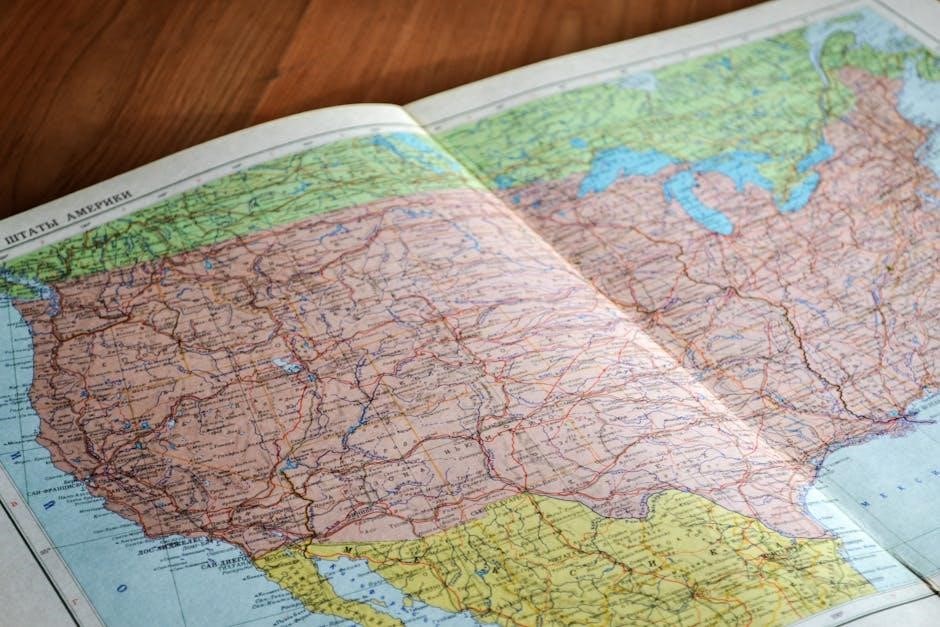
Texas county map PDFs offer flexibility in printing, but careful consideration is needed for optimal results․ High-resolution PDFs are essential for scaling to larger formats without significant quality loss․ Before printing, verify the map’s scale and adjust printer settings accordingly to maintain accuracy․
Test prints are recommended to assess color reproduction and legibility, especially for detailed maps․ Ensure your printer supports the paper size required for the desired scale․ Consider professional printing services for large-format maps to guarantee quality and precision․ Proper scaling preserves crucial details for effective use․

Legal and Accuracy Disclaimers
Understand that Texas county map PDF data has limitations; accuracy isn’t guaranteed․ Copyright restricts usage, and maps utilize the Texas Statewide Mapping System projection․
Data Accuracy and Limitations
It’s crucial to acknowledge that Texas county map PDFs, while valuable resources, are subject to inherent data accuracy limitations․ The Texas Parks and Wildlife Department explicitly states “No claims are made to the accuracy of the data․” Boundaries and names, as presented, may not reflect the most current official records due to ongoing changes in county jurisdictions and geographical features․
Users should independently verify critical information with official county sources before making decisions based on these maps․ These PDFs are representations based on available data at a specific point in time and should not be considered definitive legal documents․ Reliance on this information is at the user’s own risk․
Copyright and Usage Rights
Generally, Texas county map PDFs originating from official government sources – like the U․S․ Census Bureau or Texas Parks and Wildlife Department – are considered public domain and freely available for use․ However, maps sourced from third-party providers may have specific copyright restrictions․
Users should always review the terms of use associated with each PDF before reproduction, distribution, or commercial application․ While often permitted for personal or educational purposes, commercial use may require explicit permission from the copyright holder․ Proper attribution to the source is recommended, even for public domain materials, to maintain ethical data handling practices․
Map Projections (Texas Statewide Mapping System)
Many official Texas county maps, particularly those from the Texas Parks and Wildlife Department, utilize the Texas Statewide Mapping System (TSMS) projection․ This system is designed to minimize distortion across the state, crucial for accurate spatial analysis and representation․
Understanding the TSMS projection is vital when integrating these PDFs with Geographic Information Systems (GIS) software or performing measurements․ It’s a Lambert Conformal Conic projection optimized for Texas․ Users should be aware of the projection when scaling or combining maps from different sources to ensure data consistency and avoid inaccuracies in spatial calculations․