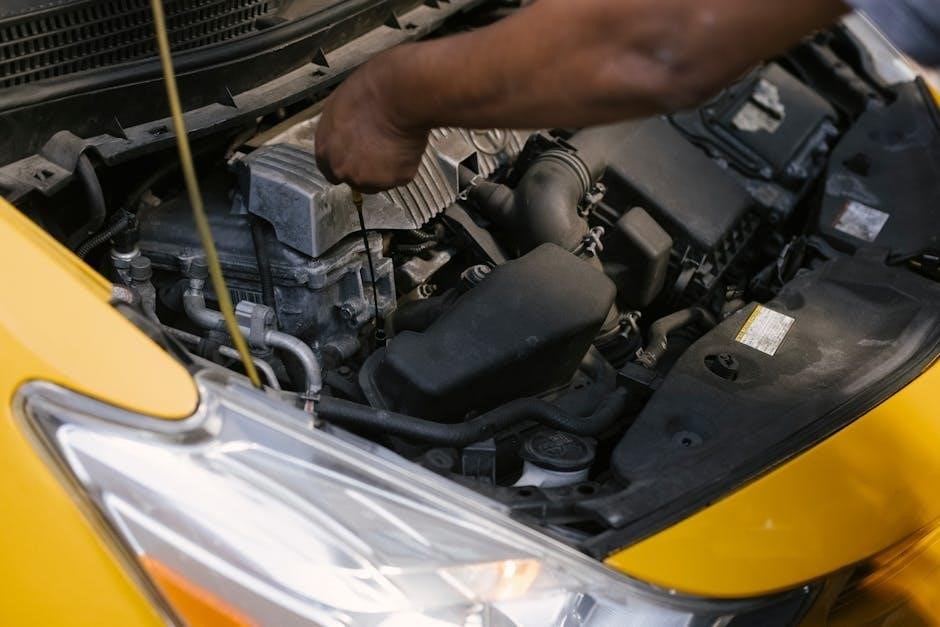
Vanguard 23 HP Engine Manual: A Comprehensive Guide
This manual details the Briggs & Stratton 23 HP Vanguard engine (Model 386447-0090-G1), providing crucial guidance for operation, maintenance, and troubleshooting of this powerful, commercial-grade engine.
The Vanguard 23 HP engine, specifically model 386447-0090-G1, represents a pinnacle of small engine engineering from Briggs & Stratton. Designed for rigorous commercial use, this V-Twin OHV engine delivers robust performance and reliable starting, even in demanding conditions. This manual serves as a comprehensive resource for owners and operators, ensuring optimal engine life and efficiency.
Understanding the engine’s capabilities and adhering to the guidelines within this document are essential for safe and effective operation. The Vanguard engine is known for its energetic output and durability, making it a preferred choice across various industries. Proper maintenance, as outlined herein, will maximize its longevity and minimize downtime. This guide will empower you to confidently maintain and troubleshoot your Vanguard 23 HP engine.
Engine Model and Type Identification
Accurate identification of your Vanguard 23 HP engine is crucial for obtaining the correct parts, accessing relevant documentation, and ensuring proper service. The complete model number, 386447-0090-G1, uniquely identifies this specific engine configuration. When referencing your engine, always utilize the full model, type, and trim number, separated by hyphens – for example, 12H702-0505-01.
This detailed identification system allows Briggs & Stratton and authorized dealers to pinpoint the exact specifications of your engine. This is particularly important when ordering replacement parts or consulting illustrated parts lists (Mfg. No: 613777-0014-J1). Correct identification avoids compatibility issues and ensures optimal performance. Refer to the engine’s statutory plate for this vital information; it’s your key to seamless support.
Locating the Engine Model Number (386447-0090-G1)
Finding your Vanguard 23 HP engine’s model number, 386447-0090-G1, is a straightforward process. This number is prominently displayed on the engine’s statutory plate, a metal tag affixed to the engine block. Typically, this plate is located in an easily accessible area, often near the carburetor or on the engine’s housing.
Carefully examine the engine’s exterior for a rectangular or square metal plate. The model number is clearly printed on this plate, alongside other important information like the type and trim codes. Accurate recording of this number is essential when ordering parts, requesting service, or downloading relevant manuals. Ensure the number is transcribed correctly, including all digits and hyphens, to guarantee compatibility and efficient support.
Understanding the Engine’s Commercial Applications
The 23 HP Vanguard engine is specifically engineered for demanding commercial use, offering robust performance and extended durability. It powers a wide array of equipment across various industries, including landscaping, construction, and agriculture. Common applications include riding mowers, walk-behind mowers, pressure washers, concrete mixers, and generators.
Its V-Twin OHV design delivers energetic performance and reliable starting, crucial for professional operators. Vanguard engines are known for their longevity and ability to withstand continuous, heavy-duty operation. This makes them a preferred choice for businesses requiring dependable power solutions. The engine’s construction prioritizes minimizing downtime and maximizing productivity in challenging work environments.

Safety Precautions and Guidelines
Always adhere to general safety rules when operating this Vanguard engine, prioritizing fuel handling and maintenance procedures to prevent accidents and ensure safe operation.
General Safety Rules
Prioritize safety during all phases of engine operation and maintenance. Always read and understand this manual before using the Vanguard 23 HP engine. Wear appropriate protective gear, including eye protection and hearing protection, to prevent injuries. Ensure the work area is well-ventilated and free of flammable materials.
Never operate the engine in enclosed spaces where exhaust fumes can accumulate. Keep children and bystanders away from the operating engine; Before performing any maintenance, disconnect the spark plug wire to prevent accidental starting. Be aware of hot surfaces and moving parts. Regularly inspect the engine for any signs of damage or wear, and address them promptly. Follow all local safety regulations and guidelines.
Fuel Handling Safety
Exercise extreme caution when handling fuel for your Vanguard 23 HP engine. Always fuel the engine outdoors in a well-ventilated area, away from open flames, sparks, or other ignition sources. Avoid spilling fuel, and if a spill occurs, immediately wipe it up with a clean cloth. Never fuel a hot engine; allow it to cool completely first.
Store fuel in an approved container, clearly labeled, and kept out of reach of children. Do not smoke while fueling or handling fuel. Use a funnel to prevent spills and overfilling. Be aware of static electricity buildup when fueling plastic containers; ground the container to prevent sparks. Dispose of old fuel properly, following local regulations.
Engine Operation Safety
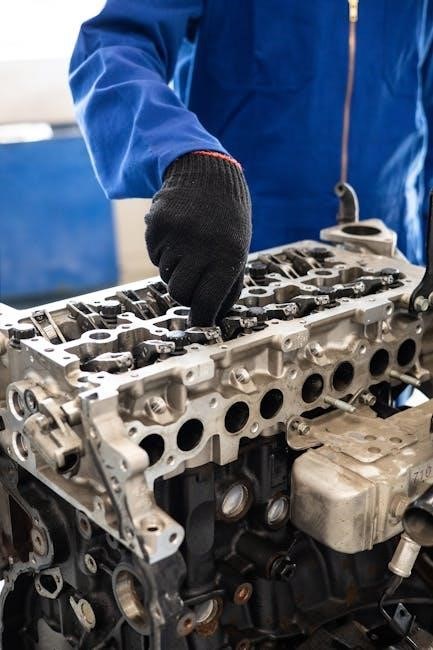
Prioritize safety during engine operation. Before starting, ensure the surrounding area is clear of people and obstructions. Never operate the engine in an enclosed space, as exhaust fumes contain dangerous carbon monoxide. Always check oil and fuel levels before each use. Be mindful of hot surfaces, such as the muffler and cylinder head, to prevent burns.
Do not modify or tamper with the engine’s safety features. Ensure all guards and shields are securely in place. If the engine exhibits unusual noises or vibrations, stop it immediately and investigate the cause. Always disconnect the spark plug wire before performing any maintenance or repairs. Operate the engine according to the manufacturer’s guidelines.
Maintenance Safety
Always prioritize safety when performing engine maintenance. Before any service, disconnect the spark plug wire to prevent accidental starting. Allow the engine to cool completely before working on hot components like the muffler or cylinder head. Wear appropriate personal protective equipment, including safety glasses and gloves.
When handling fuel, work in a well-ventilated area and avoid open flames or sparks. Properly dispose of used oil and filters according to local regulations. Ensure the engine is on a stable, level surface during maintenance. Never remove or disable any safety devices. Consult the manual for specific procedures and torque specifications to avoid damage or injury.

Engine Operation
Proper operation ensures longevity and performance. This section covers starting, stopping, break-in procedures, and optimal conditions for your Vanguard 23 HP engine.
Starting Procedures
Before attempting to start your Vanguard 23 HP engine, ensure the fuel tank contains fresh gasoline and the oil level is correct. Verify the spark plug wire is securely connected and the air filter is clean. Engage the choke, especially in colder temperatures, to enrich the fuel mixture for easier ignition.
Turn the ignition switch to the ‘ON’ position. If equipped with an electric starter, depress and hold the start button until the engine cranks and starts. For recoil start models, grasp the recoil handle firmly and pull with a smooth, deliberate motion. Once the engine starts, gradually disengage the choke. Allow the engine to warm up for a few minutes before applying a load. Always follow safety precautions during operation.
Stopping Procedures
To safely stop your Vanguard 23 HP engine, begin by allowing it to idle for a short period to cool down gradually. Avoid abruptly shutting off the engine, especially after heavy use, as this can lead to carbon buildup. Move the throttle to the idle position.
Turn the ignition switch to the ‘OFF’ position. This will disable the ignition system and stop the engine. If the engine has a fuel shut-off valve, close it to prevent fuel from reaching the carburetor; Ensure all moving parts have come to a complete stop before performing any maintenance or leaving the engine unattended. Always prioritize safety when shutting down the engine.
Break-In Period Recommendations
Proper break-in is crucial for maximizing the longevity and performance of your new Vanguard 23 HP engine. During the first 5-10 hours of operation, avoid prolonged periods of full-throttle operation or heavy loading. Vary the engine speed and load to allow the internal components to properly seat and adjust.
Regularly check oil levels during this initial period, as consumption may be slightly higher. Avoid overheating the engine. After the break-in period, change the oil and filter to remove any metallic particles resulting from initial wear. Following these recommendations will ensure a long and reliable service life for your Vanguard engine.
Optimal Operating Conditions
To ensure peak performance and durability, operate your Vanguard 23 HP engine within recommended parameters. Maintain proper cooling system functionality, ensuring adequate airflow around the engine. Use the correct grade of oil as specified in the maintenance schedule – crucial for lubrication and heat dissipation.
Avoid operating the engine in excessively dusty or dirty environments without appropriate air filtration. Regularly inspect and clean or replace the air filter. Monitor engine temperature and address any signs of overheating promptly. Consistent adherence to these guidelines will maximize efficiency and extend the engine’s operational lifespan.

Maintenance Schedule
Regular upkeep is vital for longevity. This section outlines routine tasks – oil changes, air filter checks, and spark plug inspections – to maintain peak performance.
Routine Maintenance Tasks
Consistent maintenance ensures reliable operation of your Vanguard 23 HP engine. Regularly inspect the engine for loose fasteners and damaged components. Clean the engine exterior to prevent overheating and facilitate early detection of leaks. Check the oil level before each use and top off as needed with the recommended oil type; Inspect the cooling fins for debris, ensuring adequate airflow.
Periodically examine the fuel lines for cracks or deterioration, replacing them if necessary. Verify the proper function of the throttle and choke controls. A clean air filter is crucial; inspect it frequently and clean or replace it as required to maintain optimal engine performance. Don’t neglect visual inspections of belts and pulleys for wear and tear;
Oil Change Procedures
Regular oil changes are vital for extending the life of your Vanguard 23 HP engine. First, warm the engine to operating temperature. Locate the oil drain plug and position a suitable oil drain pan underneath. Carefully remove the drain plug, allowing the old oil to completely drain. Replace the drain plug with a new gasket, tightening it securely.
Next, remove the oil filter using an appropriate oil filter wrench. Lightly lubricate the gasket of the new oil filter with fresh oil before installing it hand-tight. Fill the engine with the recommended oil type and quantity, checking the oil level with the dipstick. Finally, run the engine briefly and recheck the oil level.
Air Filter Maintenance
Maintaining a clean air filter is crucial for optimal engine performance and longevity. Regularly inspect the air filter for dirt and debris. If the filter appears dirty, remove it from the air filter housing. For paper filters, gently tap it to remove loose particles; avoid using compressed air, as it can damage the filter media.
Foam filters can be washed with mild soap and water, then thoroughly dried before re-oiling with air filter oil. Replace the air filter if it’s damaged or excessively dirty. Ensure the air filter housing is clean and properly sealed before reinstalling the filter. A clean air filter ensures proper airflow to the engine.
Spark Plug Inspection and Replacement
Regular spark plug inspection is vital for efficient combustion and engine starting. Periodically remove the spark plug and examine the electrode for wear, fouling, or damage. A properly functioning spark plug should have a clean, light tan or gray color. Black, oily deposits indicate a rich fuel mixture, while white deposits suggest a lean mixture.
If the spark plug is worn or fouled, replace it with a new spark plug of the correct type, specified in the engine’s parts list; Ensure the spark plug gap is set to the manufacturer’s recommended specification before installation. Tighten the spark plug to the specified torque to avoid damaging the cylinder head threads.
Troubleshooting Common Issues
This section addresses frequent problems like starting failures, rough running, power loss, and overheating, offering diagnostic steps for your Vanguard 23 HP engine.
Engine Won’t Start
If your Vanguard 23 HP engine fails to start, several factors could be at play. First, verify the fuel system: ensure a sufficient fuel supply and check for any obstructions in the fuel line or carburetor. Next, inspect the ignition system – a faulty spark plug or ignition module can prevent combustion.
Confirm the spark plug is clean and properly gapped, and that the ignition wire is securely connected. Also, examine the safety interlocks; ensure all controls are in the correct operating position. A flooded engine can also hinder starting; allow excess fuel to evaporate before attempting to restart. Finally, check the battery (if equipped) for sufficient charge, referencing the 8-digit model number for specifications.
Engine Runs Rough
A rough-running Vanguard 23 HP engine often indicates an issue with fuel delivery or combustion. Begin by inspecting the air filter; a clogged filter restricts airflow, causing an imbalance in the fuel-air mixture. Next, examine the spark plug – fouling or damage can lead to incomplete combustion.
Consider the carburetor; a dirty or improperly adjusted carburetor can disrupt fuel metering. Check for vacuum leaks in the intake manifold or carburetor base, as these introduce unwanted air. Ensure fresh fuel is being used, as old fuel can degrade and cause poor performance. If the problem persists, a valve adjustment or cylinder compression test may be necessary to diagnose internal engine issues.
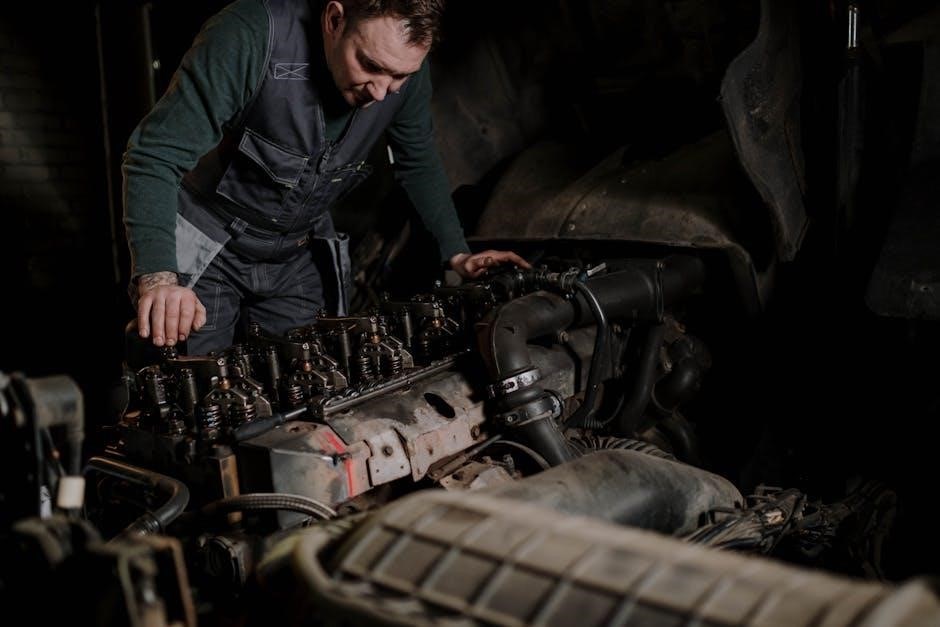
Loss of Power
Reduced power in your Vanguard 23 HP engine can stem from several sources, demanding a systematic approach to diagnosis. Initially, verify the air filter is clean, as restriction significantly impacts performance. Inspect the fuel system – a partially clogged fuel filter or weak fuel pump limits fuel delivery.
Check the spark plug for fouling or wear, hindering efficient combustion. Compression loss within the cylinder(s) is a serious concern; a compression test is crucial. Examine the governor linkage for proper operation, ensuring it’s not restricting engine speed. Finally, consider exhaust system blockage, which can create backpressure and reduce output;
Overheating Issues
Consistent overheating in your Vanguard 23 HP engine signals a critical problem requiring immediate attention. The cooling system is paramount; verify the cooling fins on the cylinder heads are free from debris, ensuring adequate airflow. Inspect the fan and its drive mechanism for proper function – a failing fan drastically reduces cooling efficiency.
Low oil levels contribute significantly to overheating, so check the oil level promptly. A malfunctioning thermostat can restrict coolant flow, causing temperatures to rise. Examine the carburetor for proper fuel mixture; a lean mixture generates excessive heat. Finally, assess for internal engine issues like a blown head gasket, potentially allowing combustion gases into the cooling system.
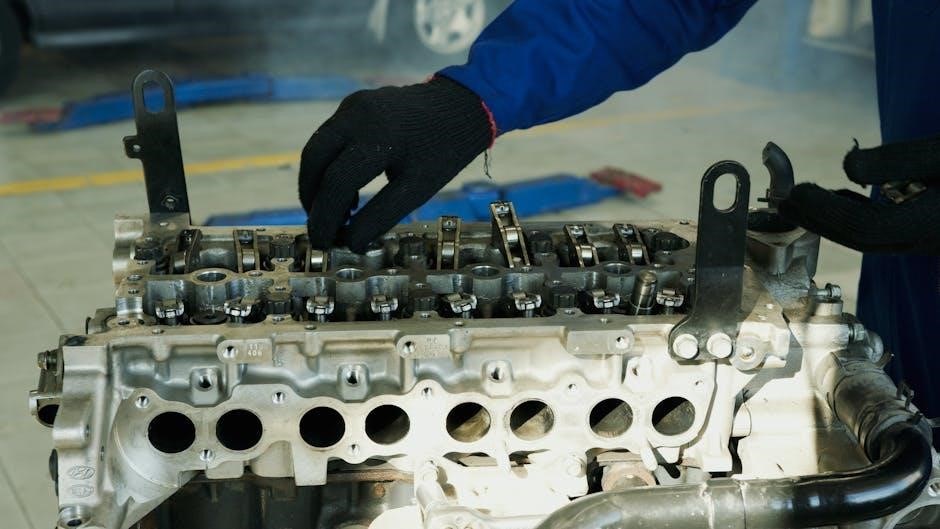
Parts and Service Information
Access illustrated parts lists using the engine model number. Replacement parts, like Mfg. No: 613777-0014-J1, are readily available through Vanguard Power Solutions.
Understanding Illustrated Parts Lists
Vanguard’s illustrated parts lists are essential resources for identifying and ordering replacement components for your 23 HP engine (Model 386447-0090-G1). These detailed diagrams break down the engine into individual assemblies and parts, each clearly labeled with a unique part number.
To effectively utilize these lists, always have your engine’s model, type, and trim information readily available – using the hyphenated format (e.g., 12H702-0505-01). The parts lists will show exploded views, making it easier to visualize how components fit together.
Carefully cross-reference the part number with your required component before ordering to ensure compatibility. These lists are available through Vanguard Power Solutions and authorized service dealers, streamlining the repair and maintenance process.
Locating Replacement Parts (Mfg. No: 613777-0014-J1)
Securing genuine Vanguard replacement parts is crucial for maintaining the performance and longevity of your 23 HP engine. Manufacturing Number 613777-0014-J1 designates a replacement engine specifically for US & Canada markets.
To locate the correct parts, utilize the illustrated parts lists, referencing your engine’s model (386447-0090-G1), type, and trim. Vanguard Power Solutions offers a comprehensive online catalog and a network of authorized dealers.
When ordering, always provide the complete part number to avoid errors. Genuine Vanguard parts are engineered to meet stringent quality standards, ensuring optimal fit and function. Avoid using non-genuine parts, as they may compromise engine reliability and void warranty coverage.
Vanguard Battery Information (8-digit Model Number)
Understanding your Vanguard battery’s 8-digit model number is essential for ordering the correct replacement. This number is prominently displayed on the statutory plate affixed directly to the battery itself.
Locate this 8-digit code – for example, 80112214 – before contacting a dealer or searching online. Providing this precise number guarantees compatibility and avoids potential issues with fit or performance.
Vanguard Power Solutions offers a range of batteries specifically designed for their engines, ensuring reliable starting power and extended battery life. Always refer to your engine’s documentation for recommended battery specifications and maintenance guidelines.
Accessing Vanguard Power Solutions
For comprehensive support and to explore the full range of Vanguard products, visit Vanguard Power Solutions online. They offer a complete catalog of engines, batteries, and accessories designed for demanding commercial applications.
Their website provides access to detailed product information, illustrated parts lists, operator manuals, and troubleshooting guides – all readily available to assist you with your Vanguard engine.
You can also connect with a Vanguard dealer through their online locator to receive expert advice, schedule maintenance, or purchase genuine Vanguard parts. Vanguard is committed to providing reliable power and exceptional customer service.

Detailed Component Overview
The Vanguard engine features a V-Twin OHV design, a robust carburetor system, a reliable ignition system, and an efficient cooling system for optimal performance.
V-Twin OHV Engine Design
The Vanguard 23 HP engine utilizes a Small Block V-Twin OHV (Overhead Valve) design, renowned for its durability and efficient power delivery in demanding commercial applications. This configuration provides a balanced engine layout, reducing vibration and enhancing overall stability. The OHV design optimizes combustion efficiency, contributing to increased fuel economy and reduced emissions.
This engine is engineered for energetic performance and quick starting capabilities, making it ideal for a wide range of professional equipment. The V-Twin arrangement allows for a compact engine footprint while delivering substantial horsepower. Its robust construction ensures long-lasting reliability, even under heavy use, and minimizes downtime for critical operations.
Carburetor System
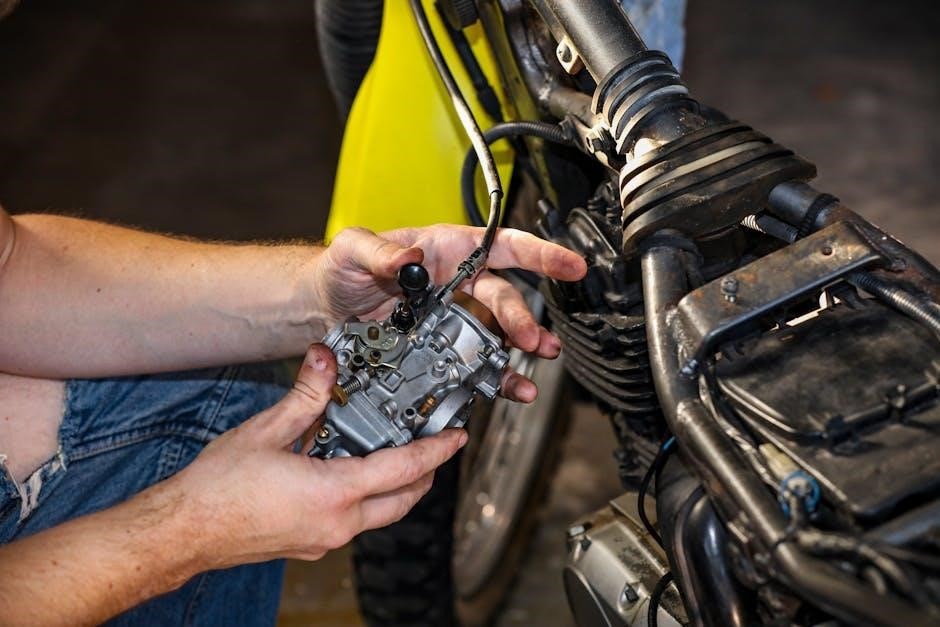
The Vanguard 23 HP engine’s carburetor system is meticulously designed to deliver a precise fuel-air mixture for optimal combustion and performance across various operating conditions. This system ensures reliable starting, smooth idling, and responsive acceleration, crucial for demanding commercial use. Proper carburetor function is essential for maximizing engine efficiency and minimizing fuel consumption.
Regular inspection and maintenance of the carburetor are vital to prevent issues like fuel starvation or excessive fuel delivery. This includes checking for clogged jets, ensuring proper float level adjustment, and verifying the integrity of fuel lines and connections. A well-maintained carburetor contributes significantly to the engine’s overall longevity and operational reliability.
Ignition System
The Vanguard 23 HP engine utilizes a robust ignition system engineered for dependable starting and consistent combustion. This system precisely times the spark to ignite the fuel-air mixture, maximizing power output and fuel efficiency. Key components include the ignition coil, spark plug, and flywheel magneto. Regular inspection of these parts is crucial for maintaining optimal engine performance.
Proper spark plug maintenance is paramount; inspect for wear, fouling, and correct gap settings. A faulty spark plug can lead to misfires, reduced power, and increased fuel consumption. The ignition coil delivers the high-voltage spark, and its functionality should be periodically checked. Ensuring a properly functioning ignition system guarantees reliable engine operation under demanding workloads.
Cooling System
The Vanguard 23 HP engine employs an efficient air-cooling system designed to maintain optimal operating temperatures, even under heavy loads. This system prevents overheating and ensures long-term engine reliability. Key components include cooling fins cast into the cylinder block and cylinder head, and a carefully designed airflow path. Maintaining a clean cooling system is vital for effective heat dissipation.
Regularly inspect the cooling fins for debris accumulation, such as grass clippings or dirt, which can restrict airflow. Ensure the engine shroud is properly installed to direct air across the fins. Overheating can cause significant engine damage, so promptly address any cooling system issues. Proper cooling ensures consistent performance and extends the engine’s lifespan.