
The Lux 1500 thermostat offers programmable control for efficient heating, detailed in its instruction manual. This guide, available as a PDF, details setup and operation.

Lux TX1500E models provide user-friendly temperature regulation, with features like hardware reset options explained within the manual. It’s a versatile heating solution.
Understanding the manual is key to maximizing the Lux 1500’s benefits, including setting schedules and utilizing the filter change indicator for optimal performance.
Overview of the Lux 1500 Model
The Lux 1500 is an electronically controlled thermostat designed for efficient and convenient heating management. As detailed in the instruction manual, this model offers programmable features, allowing users to customize heating schedules to suit their lifestyle and optimize energy consumption. It’s a versatile solution for maintaining comfortable temperatures in various environments.
Available documentation, including PDF versions of the user guide, highlights the thermostat’s compatibility with electric heating systems. The Lux TX1500E variant, specifically, is noted for its ease of use and clear control panel. The manual emphasizes the importance of proper wiring and initial setup for optimal performance.

Key specifications, such as the 220-240V power requirement and dimensions of 595x78x430, are clearly outlined in the documentation. The manual also provides information on the hardware reset button, a useful feature for troubleshooting. With a weight of 7.0 kg, the Lux 1500 is designed for wall mounting, offering a sleek and integrated heating control solution.
Key Features and Benefits
The Lux 1500 thermostat, as explained in its instruction manual, boasts several key features. Programmable settings allow for customized heating schedules, reducing energy waste and lowering costs. The ability to select between 1000W and 1500W heating modes provides flexible temperature control, adapting to varying needs.
A significant benefit is the integrated filter change indicator, ensuring optimal air quality and system efficiency – details found within the PDF user guide. The manual also highlights the hardware reset button, a valuable troubleshooting tool for resolving operational issues.
The Lux TX1500E model offers a user-friendly interface and precise temperature control. Its robust design and wall-mountable form factor contribute to a clean and integrated aesthetic. The instruction manual emphasizes ease of installation and operation, making it accessible for a wide range of users. Ultimately, the Lux 1500 delivers comfort, convenience, and energy savings.

Installation Guide
The Lux 1500 installation, detailed in the manual, requires a secure connection and wall mounting. Refer to the wiring diagram for correct connections.
Proper setup, as outlined in the PDF, ensures optimal performance and safe operation of your new thermostat.
Mounting the Thermostat
Securely mounting the Lux 1500 thermostat is crucial for accurate temperature sensing and reliable operation, as detailed in the instruction manual. Begin by selecting a suitable location on an interior wall, away from direct sunlight, drafts, and heat sources that could interfere with readings.
The manual emphasizes using appropriate screws and wall anchors, especially if mounting on drywall, to ensure the thermostat remains firmly in place. Carefully mark the screw holes using the thermostat’s baseplate as a template. Drill pilot holes if necessary, and then attach the baseplate to the wall.
Ensure the baseplate is level before fully tightening the screws. Once the baseplate is securely mounted, carefully align and snap the thermostat unit onto the baseplate. A click sound usually indicates a proper connection. Refer to the PDF guide for visual aids demonstrating the mounting process, ensuring a stable and accurate installation.
Wiring Diagram and Connections
Connecting the Lux 1500 thermostat requires careful attention to the wiring diagram provided in the instruction manual. Safety first: always disconnect power to the heating system at the breaker before commencing any wiring work.
The manual details specific terminal designations for various heating system configurations. Typically, you’ll find terminals for power (220-240V / 50Hz), and connections for the heating element – often 1000W and 1500W settings. Ensure wires are securely inserted into the correct terminals, avoiding loose connections.
Double-check all connections against the diagram before restoring power. Incorrect wiring can damage the thermostat or the heating system. The PDF manual often includes color-coded illustrations to aid in identifying the correct wires. If unsure, consult a qualified electrician to ensure a safe and proper installation.
Initial Power-Up and Setup
Upon restoring power to the Lux 1500 thermostat, the display should illuminate, indicating successful power-up. Refer to the instruction manual for initial setup procedures. The first step usually involves setting the current date and time, crucial for programmable features.
The manual guides you through selecting the appropriate heating system type – electric, for example. Next, configure your preferred temperature units (Celsius or Fahrenheit). Some models may prompt you to run a system test to verify correct wiring and operation of the heating element (1000W/1500W).
Familiarize yourself with the control panel as outlined in the manual. Initial setup also includes understanding the filter change indicator and how to reset it. A properly configured thermostat ensures efficient and comfortable heating, maximizing the benefits of your Lux 1500.

Operating Instructions
Lux 1500 operation, detailed in the manual, involves using the control panel to adjust settings. Turning the knob clockwise raises temperature, as per instructions.
The manual explains selecting heating modes (1000W, 1500W) and utilizing programmable features for customized comfort and energy efficiency.
Understanding the Control Panel
The Lux 1500 thermostat’s control panel is designed for intuitive operation, as thoroughly explained in the instruction manual. The primary control is a rotary knob, used to set the desired room temperature. Rotating clockwise increases the temperature, while counter-clockwise rotation lowers it. A “MAX” indicator signifies the highest heating setting.
The panel also features indicator lights. These lights illuminate to show when the heating element is active, providing visual confirmation that the thermostat is calling for heat. The manual details the specific meaning of each light, including potential error indications. Understanding these lights is crucial for troubleshooting.
Furthermore, the control panel houses buttons for accessing programmable features and settings. The manual provides step-by-step guidance on navigating these menus and customizing the thermostat to your specific needs. Familiarizing yourself with the panel’s layout and functions, as outlined in the PDF guide, ensures optimal control and efficiency.
Setting the Temperature
Setting the temperature on your Lux 1500 thermostat is straightforward, as detailed in the instruction manual. Utilize the rotary control knob on the control panel to adjust the desired room temperature. Turning the knob clockwise increases the setpoint, while rotating it counter-clockwise decreases it. The manual emphasizes observing the “MAX” indicator, representing the highest possible heating level.
The manual clarifies that the thermostat will automatically cycle the heating element on and off to maintain the selected temperature. You’ll hear a click when the thermostat turns off, and the control panel light will extinguish, indicating the room temperature is being maintained.
For precise temperature control, refer to the PDF guide for calibration tips. The manual also suggests starting with a moderate setting and adjusting incrementally to achieve optimal comfort. Remember to allow sufficient time for the room to reach the set temperature before making further adjustments.
Selecting Heating Modes (1000W, 1500W)
The Lux 1500 thermostat, as explained in the instruction manual, offers two primary heating modes: 1000W and 1500W. These modes allow you to tailor the heat output to your specific needs and room size; The manual doesn’t explicitly detail a selection method beyond inherent operation.
Depending on the model (TOR 21 series referenced in related documents), some units may offer additional wattage options like 2000W or 2200W. However, the core Lux 1500 functionality centers around the 1000W and 1500W settings. The PDF guide doesn’t provide a dedicated switch or button for mode selection.
The manual implies that the thermostat automatically manages the power output based on the set temperature and room conditions. Selecting a higher temperature will likely engage the 1500W mode for faster heating, while lower settings may utilize the more energy-efficient 1000W option.
Using the Programmable Features
The Lux 1500 thermostat, according to the instruction manual, boasts programmable features for customized heating schedules. While specific details within the readily available documentation are limited, the manual highlights the ability to set different temperatures for various times of the day.
The PDF guides, including those for related Lux models like the TX1500E, suggest a user interface allowing for multiple program settings. These programs can be tailored to match your lifestyle, optimizing comfort and energy savings. The manual emphasizes the importance of understanding the programming logic for effective use.
Though the exact steps aren’t fully detailed in the snippets provided, the programmable features likely involve setting start times, end times, and desired temperatures for each period. Refer to the complete instruction manual for a comprehensive guide to creating and managing these schedules, maximizing the thermostat’s efficiency.

Advanced Settings
Lux 1500’s manual details advanced options like schedule setting, filter change indicators, and a hardware reset button for troubleshooting, enhancing control.
The instruction manual provides guidance on customizing these features for optimal performance and maintaining the thermostat’s functionality over time.
Setting a Schedule
The Lux 1500 thermostat, as detailed in its instruction manual, offers programmable scheduling for customized comfort and energy savings. This feature allows users to define different temperature settings for various times of the day and days of the week.
To set a schedule, consult the manual for specific button combinations and menu navigation. Typically, you’ll access the programming mode through the control panel. You can then create distinct periods – for example, ‘Wake,’ ‘Leave,’ ‘Return,’ and ‘Sleep’ – assigning a desired temperature to each.
The manual will guide you through setting the start time and duration for each period. Some models allow for different schedules for weekdays and weekends, providing even greater flexibility. Remember to save your settings after programming to ensure the schedule is activated. Properly configured schedules optimize heating efficiency and reduce energy consumption, maximizing the benefits of your Lux 1500.
Filter Change Indicator
The Lux 1500 thermostat’s instruction manual highlights a useful feature: a filter change indicator. This function reminds users to replace or clean the air filter, ensuring optimal heating system performance and air quality.
The manual explains that the indicator activates after a predetermined period of operation, or based on accumulated run time. When illuminated, it signals that the filter requires attention. Ignoring this indicator can lead to reduced heating efficiency, increased energy consumption, and potential system damage.
To reset the indicator after filter maintenance, the manual details a specific button sequence. This confirms to the thermostat that a new filter has been installed. Regularly checking and replacing the filter, guided by the indicator, prolongs the lifespan of your heating system and maintains a healthy indoor environment. Refer to your Lux 1500’s manual for precise reset instructions.
Hardware Reset Button Instructions
The Lux 1500 thermostat instruction manual details the use of a hardware reset button, a crucial feature for resolving certain operational issues. This button, located on the circuit board, allows for a complete system reset, bypassing software glitches.
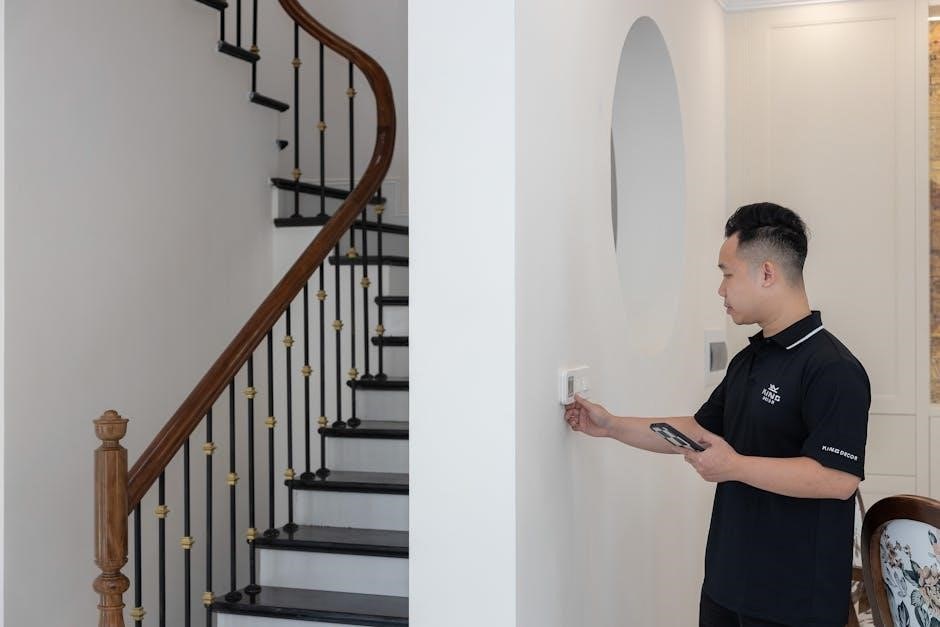
The manual emphasizes that this reset should only be used as a last resort, after attempting standard troubleshooting steps. Accessing the button requires removing the thermostat’s cover and carefully locating it on the internal components. A small tool, like a paperclip, is typically needed to depress the button;
Upon activation, the Lux 1500 will revert to its factory default settings, requiring a complete re-setup. The manual provides clear guidance on this process. Incorrectly using the reset button can cause further complications, so carefully follow the manual’s instructions for a successful restoration.
Troubleshooting
The Lux 1500 thermostat manual offers solutions for common issues, including error codes. Refer to it for guidance on resolving operational problems and restoring functionality.
Common Issues and Solutions
If the thermostat display is blank, first verify the power supply and wiring connections as detailed in the Lux 1500 instruction manual. A loose connection or tripped breaker could be the cause. If the temperature isn’t accurate, ensure the thermostat isn’t exposed to direct sunlight or drafts, which can skew readings.
For unresponsive controls, attempt a hardware reset using the button described in the manual; this often resolves minor software glitches. If the heating isn’t activating, double-check the selected heating mode (1000W or 1500W) and confirm the set temperature is higher than the current room temperature.
Regarding filter change indicators, the manual explains how to reset this after replacing the air filter. If error codes appear, consult the error code section within the manual for specific troubleshooting steps. Always prioritize safety and disconnect power before inspecting wiring.
Error Codes and Meanings
The Lux 1500 thermostat’s instruction manual details specific error codes to aid troubleshooting. While the provided text doesn’t list specific codes, it emphasizes consulting the manual for their meanings. Generally, error codes indicate issues with the sensor, wiring, or internal components.
A common error might signal a faulty temperature sensor, requiring professional repair or replacement. Another code could point to a wiring problem, necessitating careful inspection of connections as outlined in the manual. Internal errors often suggest a more significant issue with the thermostat’s circuitry.
Always refer to the manual for the precise interpretation of each code and recommended actions. Ignoring error codes can lead to inefficient heating or complete thermostat failure. Do not attempt repairs beyond your expertise; consult a qualified technician for complex issues.

Technical Specifications
The Lux 1500 operates on 220-240V / 50Hz, with dimensions of 595x78x430 and a weight of 7.0 kg, as detailed in its manual.
Power Requirements (220-240V / 50Hz)
The Lux 1500 thermostat is specifically designed to operate within a voltage range of 220 to 240 Volts, and a frequency of 50 Hertz; This specification is crucial for ensuring correct and safe operation of the device, and is clearly outlined in the instruction manual.
Attempting to use the thermostat with a different voltage or frequency can lead to malfunction, damage to the unit, or even pose a safety hazard. Always verify that your local power supply matches these requirements before connecting the Lux 1500. The manual emphasizes the importance of adhering to these specifications.
Incorrect power input voids the warranty and may result in irreparable damage. If you are unsure about your power supply, consult a qualified electrician. The instruction manual provides a warning against deviating from the specified 220-240V / 50Hz power requirements for optimal performance and longevity.
Dimensions (595x78x430)
The Lux 1500 thermostat boasts specific physical dimensions, detailed in the instruction manual, crucial for installation planning. Measuring 595 millimeters in length, 78 millimeters in width, and 430 millimeters in height, understanding these measurements is vital for ensuring a proper fit within your intended space.
Before mounting, carefully assess the available area and confirm sufficient clearance around the thermostat. The instruction manual includes diagrams illustrating these dimensions, aiding in accurate placement. Consider proximity to power outlets and existing wiring when determining the installation location.
These dimensions are particularly important when replacing an existing thermostat, ensuring the Lux 1500 will seamlessly integrate without requiring modifications to the wall or surrounding infrastructure. Refer to the manual for detailed illustrations and guidance on mounting, utilizing the specified 595x78x430 dimensions.
Weight (7.0 kg)
The Lux 1500 thermostat has a total weight of 7.0 kilograms, a specification detailed within the comprehensive instruction manual. This weight is an important consideration during the installation process, influencing mounting hardware selection and ensuring secure wall attachment.
The instruction manual recommends utilizing appropriate wall anchors capable of supporting this weight to prevent accidental dislodgement. It’s crucial to verify the wall’s structural integrity before commencing installation, particularly with drywall or plasterboard surfaces.
Understanding the 7.0 kg weight also aids in unpacking and handling the thermostat, minimizing the risk of damage during unboxing or transportation. The manual emphasizes careful handling to preserve the unit’s functionality and aesthetic appearance. Proper mounting, accounting for the weight, guarantees long-term stability and reliable operation.

Safety Information
The Lux 1500 manual stresses crucial precautions. Always disconnect power before wiring. Improper installation risks damage or malfunction; consult a qualified technician if needed.
Important Safety Precautions
Before installing or servicing the Lux 1500 thermostat, always disconnect the power supply at the circuit breaker or fuse box to prevent electrical shock and potential damage to the unit. The instruction manual emphasizes this critical step.
Installation should be performed by a qualified technician if you are unfamiliar with electrical wiring. Incorrect wiring can lead to hazardous situations, including fire or electric shock. Ensure all connections are secure and comply with local electrical codes.
Do not expose the thermostat to excessive moisture or extreme temperatures. Avoid placing it in direct sunlight or near sources of heat. The manual advises against using abrasive cleaners or solvents, as they can damage the thermostat’s surface and internal components.
Regularly inspect the wiring for any signs of damage or wear. If any issues are detected, immediately disconnect the power and replace the damaged components. Never attempt to repair the thermostat yourself; contact a qualified technician for assistance. Always follow the guidelines outlined in the Lux 1500 instruction manual for safe and reliable operation.