Psilocybin Mushrooms of the World: An Identification Guide ─ Article Plan
This comprehensive guide details over 100 psychedelic mushroom species globally, offering clear identification, foraging advice, and safety protocols for enthusiasts and researchers alike.
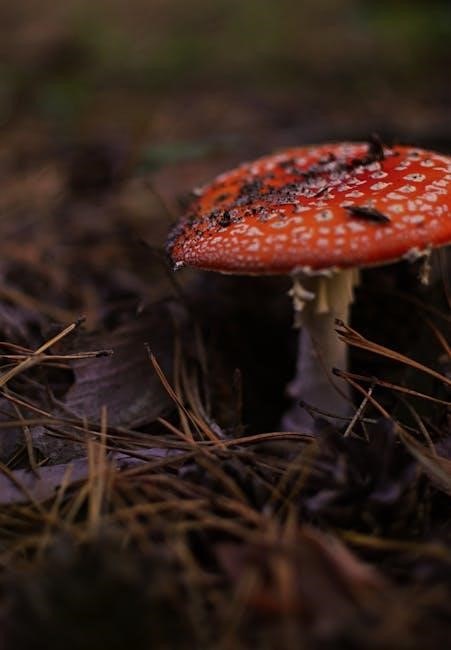
Psychoactive mushrooms have a rich history in religious and cultural practices, from Aztec feasts to ancient Greek mysteries, now experiencing renewed research and public fascination.
Historical and Cultural Significance
Throughout history, psilocybin mushrooms have held profound significance for various cultures. Archaeological evidence suggests their use in religious ceremonies dating back centuries, notably within the Aztec civilization where they were revered and consumed during annual feasts. Similarly, the ancient Greek Eleusinian mysteries involved secretive rituals potentially utilizing these fungi to induce altered states of consciousness.
Indigenous communities in Mesoamerica traditionally employed psilocybin mushrooms for divination, healing, and spiritual exploration, viewing them as sacred entities connecting them to the divine. These practices demonstrate a long-standing human relationship with these mushrooms, extending far beyond modern recreational or medicinal interest, highlighting their deep-rooted cultural importance and spiritual power.
Recent Surge in Research and Public Interest
The past decade has witnessed an explosion of interest in psilocybin mushrooms, fueled by promising research into their therapeutic potential. Studies are exploring their efficacy in treating conditions like depression, anxiety, PTSD, and addiction, leading to increased scientific scrutiny and clinical trials. This resurgence of research has simultaneously sparked significant public curiosity regarding these “magic mushrooms” and their effects.
Consequently, there’s a growing demand for reliable information, comprehensive field guides, and accurate identification resources. The need for accessible knowledge is urgent, as public interest outpaces established understanding, necessitating responsible education and safe practices surrounding psilocybin mushroom use and identification.
Key Genera Containing Psilocybin
Psilocybin and psilocin are found within several genera, notably Psilocybe, Panaeolus, Pluteus, and Gymnopilus, requiring careful identification.
Psilocybe Species
The Psilocybe genus is arguably the most well-known for containing psychoactive mushrooms. This diverse group exhibits a wide range of morphological characteristics, making precise identification crucial. Species like Psilocybe cubensis, famous for its potency and ease of cultivation, are globally distributed. However, many other Psilocybe species exist, varying in cap color (from caramel to golden brown), stem features, and habitat preferences.
Accurate identification relies on examining both macroscopic features – such as cap shape, gill attachment, and spore print color – and microscopic details, including spore morphology and the presence of cystidia. Distinguishing between similar-looking, non-psychoactive species is paramount for safety, as misidentification can lead to unintended consequences. DNA sequencing is increasingly used to confirm species identification within this complex genus.
Panaeolus Species
Panaeolus mushrooms are often found in grasslands and on dung, differing significantly from Psilocybe in several key aspects. Many Panaeolus species contain psilocybin and psilocin, though potency can vary considerably. Panaeolus cyanescens, known as “blue foot,” is a potent species recognizable by its dark spore print and bluing reaction when bruised.
Identification can be challenging due to their deliquescing nature – meaning they quickly dissolve into an inky black liquid as they mature. Microscopic examination of spore morphology (distinctly smooth spores) and cystidia is essential for accurate classification. Careful attention must be paid to differentiating Panaeolus from potentially toxic look-alikes, emphasizing the importance of positive identification before consumption.
Pluteus Species
Pluteus mushrooms present a unique challenge in identification, as many species are visually similar and require microscopic analysis for confirmation. While less commonly known for psilocybin content than Psilocybe or Panaeolus, certain Pluteus species do contain psychoactive compounds. Pluteus americanus and Pluteus natarius are examples requiring careful scrutiny.
These mushrooms typically grow on decaying wood, exhibiting a distinctive pinkish spore print. Macroscopic features like cap texture and gill attachment are helpful, but often insufficient for definitive identification. DNA sequencing data is increasingly valuable for accurate species determination within the Pluteus genus, especially given the potential for misidentification with poisonous varieties.
Gymnopilus Species
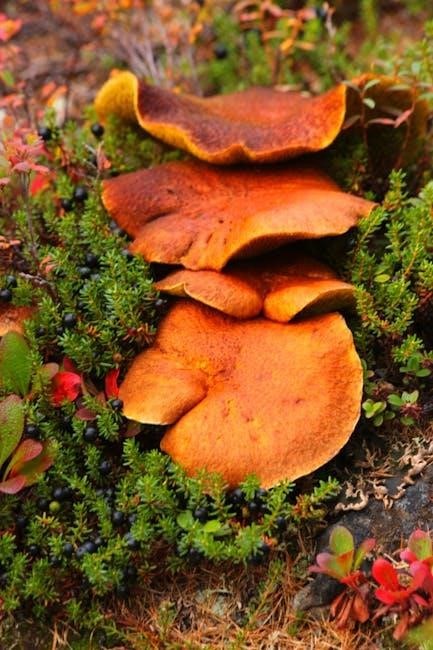
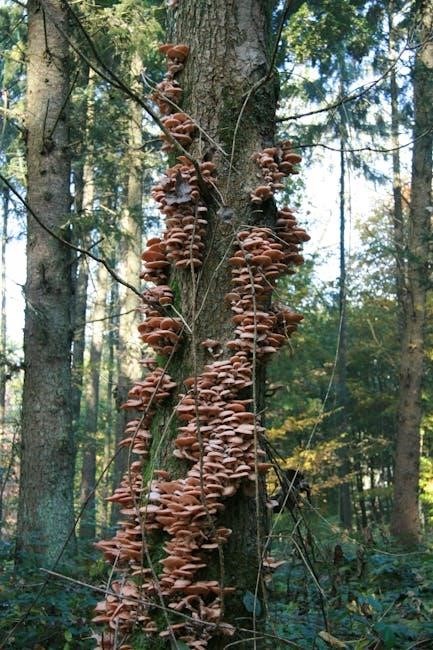
Gymnopilus mushrooms are often overlooked in discussions of psilocybin-containing fungi, yet several species possess notable psychoactive properties. Distinguished by their rusty-brown to orange hues and often a farinaceous (floury) odor, Gymnopilus species typically grow on wood, both decaying and living. Gymnopilus junonius, commonly known as the Laughing Gym, is a well-documented example.
However, identification is crucial, as some Gymnopilus species can cause gastrointestinal distress. Microscopic examination of spore morphology and the presence of cystidia are essential for accurate classification. Like other genera, DNA sequencing provides a valuable tool for confirming species identity and differentiating between closely related, yet chemically distinct, varieties.
Essential Identification Features
Accurate identification relies on both macroscopic details—cap shape, color, and gill attachment—and microscopic analysis, including spore morphology and cystidia presence.
Macroscopic Characteristics
Observing a mushroom’s physical traits is the first step in identification. Cap morphology—shape, color, and texture—provides crucial clues; variations range from convex to umbonate, with colors spanning browns, yellows, and even blues. Stem characteristics, including length, width, and the presence or absence of a ring (annulus), are equally important.
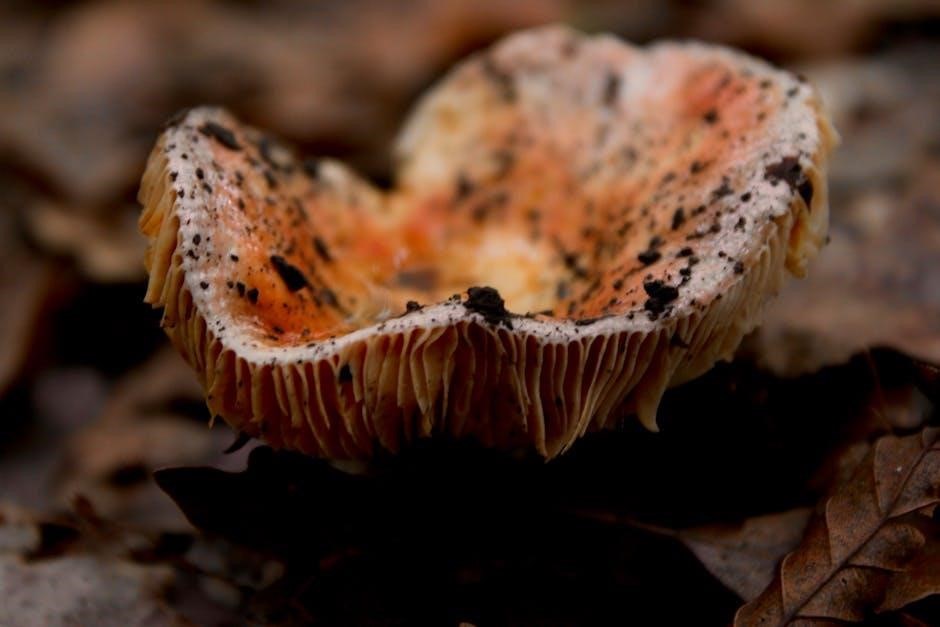
Gill attachment—how the gills connect to the stem—is a key feature, described as free, adnate, or decurrent. Finally, determining the spore print color, often achieved by placing the cap on paper overnight, offers a definitive characteristic. These visible features, when carefully noted, form the foundation for accurate species recognition.
Cap Morphology (Shape, Color, Texture)
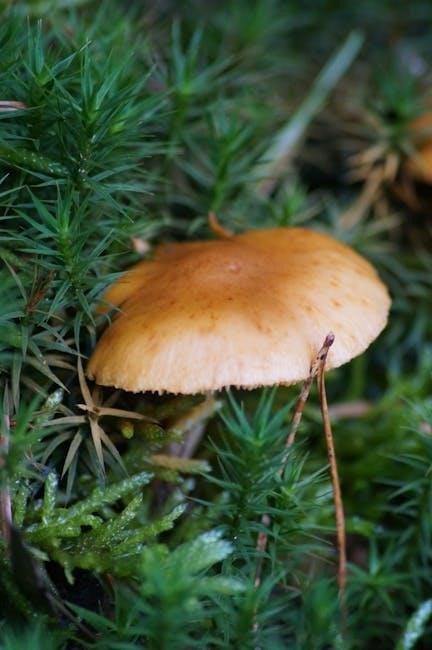
The cap’s form is a primary identifier. Shapes vary significantly, from initially convex, flattening with age, to bell-shaped or umbonate (with a central bump). Colors are diverse, encompassing shades of brown, ochre, cream, and sometimes exhibiting bluing when bruised, indicating psilocybin presence.
Texture also provides clues – caps can be smooth, dry, sticky, or even covered in small scales. Observing these details, alongside the cap’s diameter, is crucial. Variations within a species exist, but consistent patterns emerge, aiding in accurate identification alongside other macroscopic features.
Stem Characteristics (Length, Width, Presence of a Ring)
The stem, or stipe, offers vital identification clues. Length and width vary considerably between species, ranging from slender and fragile to robust and substantial. Coloration can be similar to the cap or distinctly different, often exhibiting bruising that turns blueish.
Crucially, note the presence or absence of a ring (annulus) – a remnant of the partial veil. Some species possess a fragile ring that may disappear with age. The stem’s texture – smooth, fibrous, or scaly – and its base (bulbous or tapering) are also important characteristics to observe during identification.
Gill Attachment and Spore Print Color
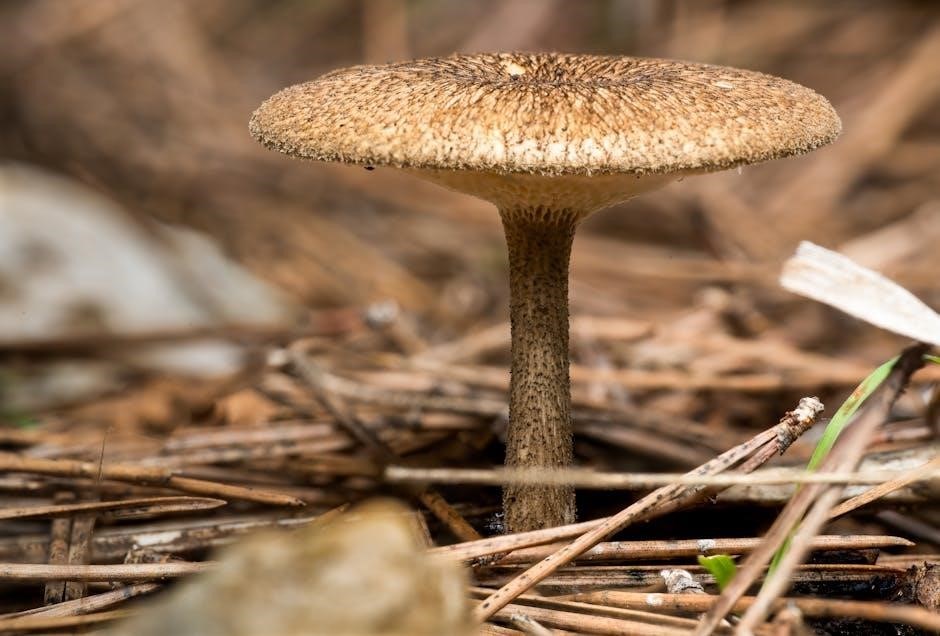
Gill attachment describes how the gills connect to the stem, a key identifying feature. Variations include free, adnate, decurrent, and notched attachments, each specific to certain genera. Observing the gill spacing – close, crowded, or distant – is also crucial.
The spore print color is paramount for accurate identification. Psilocybin mushrooms typically produce dark spore prints, ranging from deep purple-black to chocolate brown. Obtaining a spore print involves placing the cap, gills down, on a surface (paper or glass) overnight to collect the released spores. This simple test is invaluable for narrowing down possibilities.
Microscopic Characteristics
Microscopic analysis is often essential for definitive psilocybin mushroom identification, complementing macroscopic observations. This involves examining spore morphology – shape, size, and ornamentation – using a microscope. Spores can be smooth, warty, or adorned with intricate patterns, aiding species differentiation.
The presence and characteristics of cystidia are also vital. Cystidia are specialized cells found on gills or cap surfaces, varying in shape and abundance between species. Examining these features, alongside spore details, provides crucial taxonomic information. DNA sequence data increasingly supports microscopic findings, offering a robust identification approach.
Spore Morphology (Shape, Size, Ornamentation)
Spore characteristics are paramount in psilocybin mushroom identification. Spore shape varies significantly – elliptical, lemon-shaped, or cylindrical – and size is measured in micrometers. Ornamentation refers to the spore surface texture, ranging from smooth walls to intricate ridges or warts.
Detailed observation under a microscope reveals these nuances. For example, Psilocybe spores are typically smooth and dark, while Panaeolus spores are often mottled. Accurate measurement and description of these features, combined with other microscopic data, are crucial for precise species determination, bolstering field identification.
Presence of Cystidia
Cystidia are specialized cells found on gills and stems, vital for mushroom identification. These structures vary greatly in shape, size, and abundance between species. Observing cystidia requires microscopic examination of gill and stem tissues, revealing key differentiating characteristics.
Their presence, absence, and morphology are significant taxonomic indicators. Some species exhibit abundant cystidia, while others have few or none. Cystidia can be smooth, ornamented, or even contain refractive crystals. Careful documentation of cystidial features, alongside spore analysis, provides a robust foundation for accurate species classification.
Foraging and Habitat
Successful foraging requires knowing optimal seasons, preferred habitats like woodlands and meadows, and geographical distributions of key psilocybin species for safe collection.
Optimal Times for Searching
Pinpointing the ideal time to forage for psilocybin mushrooms is crucial for a successful hunt. Generally, the autumn months, following periods of substantial rainfall, present the most favorable conditions. However, this can vary significantly based on geographical location and specific species. Spring can also yield results, particularly after consistent moisture.
Pay close attention to weather patterns; several days of warm, humid weather following a dry spell often triggers fruiting. Early morning searches are often best, as mushrooms can become more difficult to spot as the day progresses and animals may begin foraging as well. Remember that consistent monitoring of known habitats throughout the growing season is key to maximizing your chances of discovery.
Preferred Habitats (Woodlands, Meadows, Dung)
Psilocybin mushrooms exhibit diverse habitat preferences, demanding adaptability from the forager. Many Psilocybe species thrive in woodlands, particularly in areas with decaying wood and leaf litter, often associated with hardwood trees. Panaeolus species frequently appear in meadows and pastures, sometimes even in well-manured lawns.
Certain species, like some Gymnopilus, favor coniferous forests and decaying conifer wood. A less common, but notable habitat is dung, where specific species colonize the manure of herbivores. Understanding these preferences is vital; focusing your search within these environments significantly increases the likelihood of a successful find. Careful observation of the surrounding vegetation and substrate is paramount.
Geographical Distribution of Key Species
The distribution of psilocybin mushrooms is remarkably global, though specific species exhibit regional concentrations. Psilocybe cubensis, perhaps the most well-known, is prevalent in subtropical and tropical regions worldwide, including the Americas, Asia, and Australia. Psilocybe semilanceata, commonly found in Europe and North America, favors temperate grasslands.
Panaeolus cyanescens is widespread across Europe, North America, and parts of Asia, often appearing after rainfall. Species within Pluteus and Gymnopilus demonstrate more localized distributions. Understanding these patterns is crucial for targeted foraging, but remember that distribution data is constantly evolving with new discoveries and climate change impacts.
Safety Considerations & Look-Alikes
Prioritize positive identification to avoid dangerous look-alikes; accurate knowledge and cautious foraging are essential for safe psilocybin mushroom experiences.
Dangerous Look-Alike Species
Misidentification poses a significant risk when foraging for psilocybin mushrooms. Several toxic species closely resemble psychoactive varieties, potentially leading to severe illness or even fatality. Galerina marginata, for example, contains amatoxins, causing liver failure, and often grows in similar woodland habitats as Psilocybe species; Similarly, certain Cortinarius mushrooms can be mistaken for psilocybes, inducing kidney damage.
Beginners must exercise extreme caution and never consume a mushroom without 100% certainty of its identification. Learning to differentiate key features – spore print color, gill attachment, and presence of a ring – is crucial. Consulting with experienced mycologists and utilizing reliable field guides are highly recommended to minimize the risk of accidental poisoning. Remember, even experienced foragers can make mistakes, emphasizing the importance of thorough verification.
Importance of Positive Identification
Accurate identification is paramount when dealing with psilocybin mushrooms. Consuming a misidentified mushroom can have devastating consequences, ranging from gastrointestinal distress to organ failure and death. Relying on superficial characteristics alone is insufficient; a multi-faceted approach is essential. This includes careful examination of macroscopic features – cap shape, color, and stem characteristics – alongside microscopic analysis of spore morphology and the presence of cystidia.
Cross-referencing multiple identification resources, such as field guides and online databases, is crucial. When in doubt, discard the specimen. Never consume a mushroom unless you are absolutely certain of its identity. Prioritizing safety over potential experience is non-negotiable in the world of mycology.
Safe Dosage Guidelines
Determining a safe dosage of psilocybin mushrooms is highly individual and depends on factors like body weight, metabolism, and sensitivity. Starting with a low dose – typically 1-2.5 grams of dried mushrooms – is strongly recommended, especially for first-time users. This allows for assessment of individual response and minimizes the risk of overwhelming effects.
Gradual increases in dosage can be considered on subsequent occasions, but always with caution. Set and setting – mindset and environment – are equally important as dosage. A calm, comfortable, and supportive environment is crucial for a positive experience. Avoid combining psilocybin with other substances, including alcohol and medications.
Resources and Further Learning
Explore recommended field guides, online databases, and DNA sequence data to deepen your understanding of psilocybin mushroom identification and responsible exploration.
Recommended Field Guides
For beginners, David Arora’s “Mushrooms Demystified” remains a cornerstone resource, offering detailed descriptions and illustrations, though not solely focused on psilocybin species. Paul Stamets’ work, including “Growing Gourmet and Medicinal Mushrooms,” provides valuable mycological context.
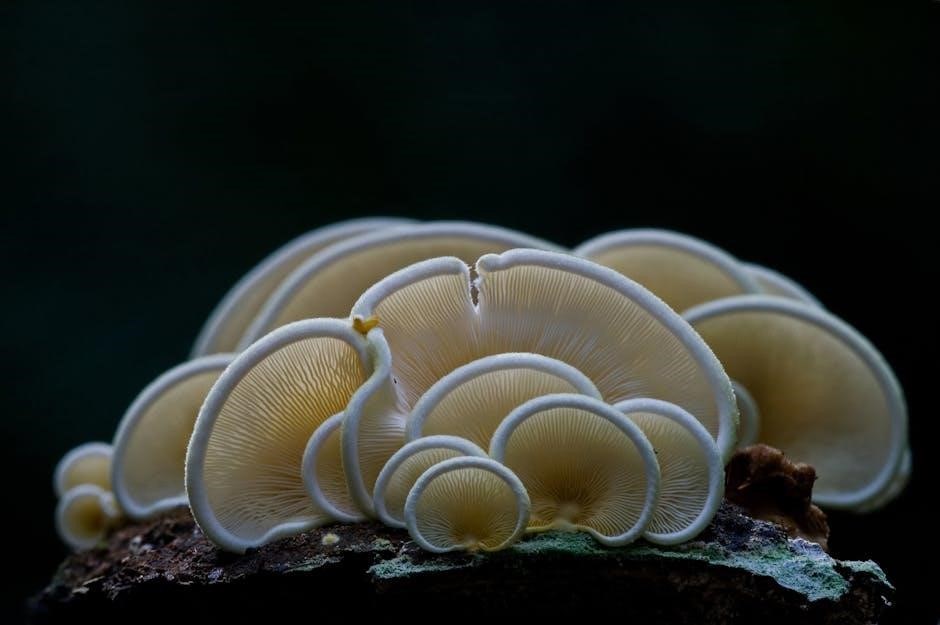
More specialized guides are emerging to meet the growing demand, focusing specifically on psychedelic fungi. These often include high-quality photographs crucial for accurate identification. Seek out guides with regionally specific information, as species distribution varies greatly.
Always cross-reference information from multiple sources and prioritize guides authored by experienced mycologists. Remember that field guide accuracy can vary, so critical evaluation is essential for safe foraging practices.
Online Databases and Communities
Several online resources complement traditional field guides, offering expanded species information and identification assistance. Shroomery.org is a long-standing, comprehensive forum with extensive discussion threads and image galleries. iNaturalist allows users to upload observations and receive identifications from a community of experts.
DNA sequence data is increasingly available online, aiding in species verification, particularly for challenging identifications. Websites compiling these sequences can be invaluable for resolving taxonomic uncertainties.
Exercise caution when relying on online communities, as identification accuracy isn’t always guaranteed. Always verify information with trusted sources and prioritize safety above all else.
DNA Sequence Data for Identification
Molecular phylogenetics is revolutionizing psilocybin mushroom identification, offering a powerful tool to resolve taxonomic ambiguities. Analyzing DNA sequences, particularly from the ITS region, provides objective data for species delineation. This is especially crucial for morphologically similar species.
Publicly accessible databases like GenBank contain a growing collection of psilocybin mushroom sequences, enabling researchers and enthusiasts to compare samples. Utilizing these resources requires understanding basic bioinformatics principles.
DNA sequencing isn’t a replacement for traditional identification methods, but a valuable supplement. It’s best used in conjunction with macroscopic and microscopic features for accurate species determination.